Built for Constraints
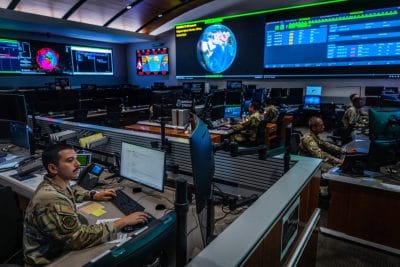
Programs designed for actual operating conditions: limited people, compressed time, degraded communications, sustained mission pressure.


Inspections measure documentation, not execution, and programs are built to what gets measured. Policy defines what a program must contain, not how to make it work, and that gap falls to collateral-duty staff with no formal continuity training. When an event occurs, the command’s first decisions rest on three questions the program was never built to answer:


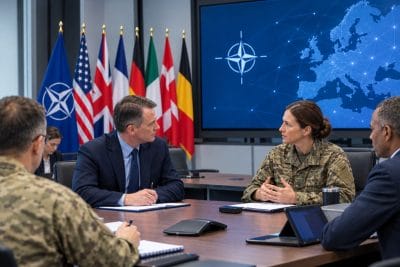
The gap is the difference between a policy that describes continuity and a capability that delivers it under limited people, compressed time, degraded communications, and sustained mission pressure. Vision Continuity builds that capability through direct program implementation across defense, federal, and NATO organizations. Decision-ready outputs the client owns and maintains.


Measure actual executable capability against current policy and the conditions a real disruption would impose. The result is an honest picture of where the program stands and what it would take to close the gap.
Outcome: A defensible baseline leadership can brief and stand behind.
Build the decision-ready outputs that close the gap: prioritized functions, restore sequences, dependency maps, and decision packages leadership can act on. Validate them under realistic exercises and improvement roadmap.
Outcome: Executable capability proven under the conditions it was built for.
The methodology transfers as the work proceeds. Your team owns the outputs and sustains the program through regular inspection cycles, mission shifts, and leadership turnover.
Outcome: A capability that holds without us, no licensing, no dependency.